
Compare two offers using the same questions: term total, currency, player costs, concurrent usage, device fit and support process. Keep unverified claims out of the comparison until the seller explains them. A logo wall, resolution label or customer counter does not answer these questions. The strongest offer for one household may be a poor fit for another with different devices or viewing patterns.
Why it matters
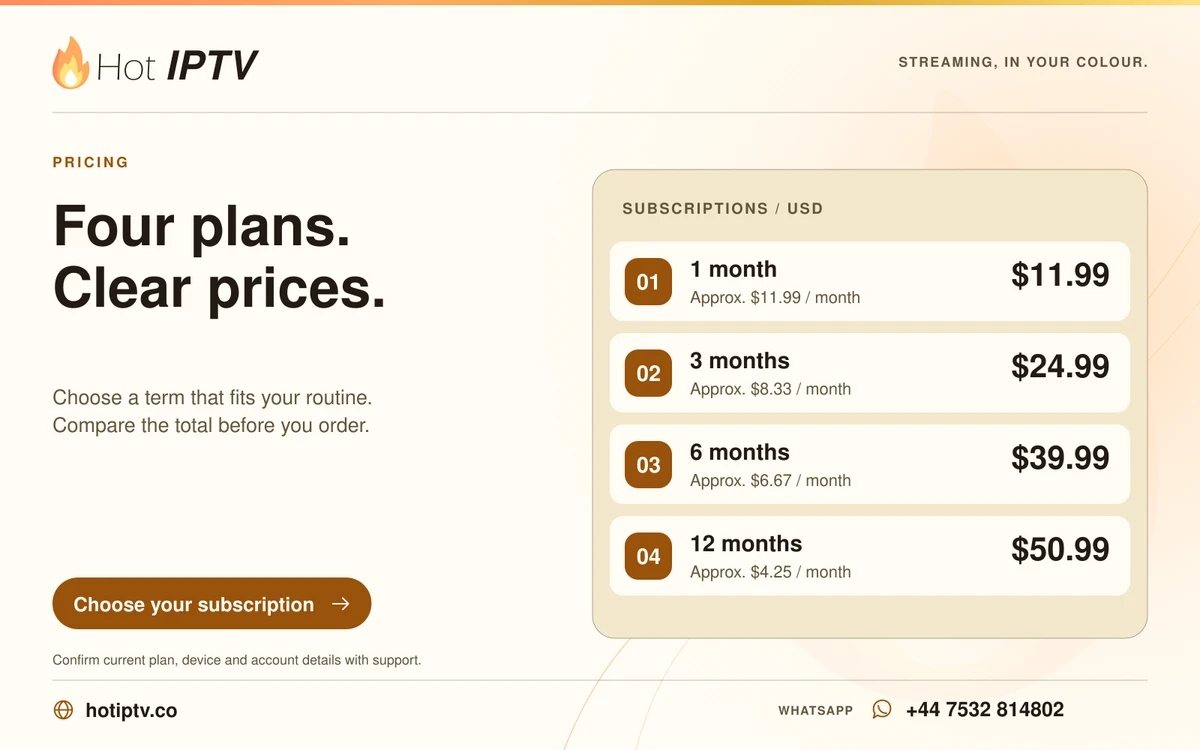
A fair comparison holds duration, currency, connection allowance and software costs steady. Otherwise a cheaper-looking offer may simply describe a different product. Bringing those conditions onto one page makes differences visible without relying on unverifiable catalogue counts or broad quality claims from either seller.
Work through the steps
- Create two columns and enter only information that can be traced to the published offer or a direct written response from the seller.
- Use identical units for term length and price, and add separate rows for player fees, simultaneous sessions and the support route.
- Mark unanswered questions clearly and resolve the ones that affect your decision before deciding which offer fits the household better.
What to avoid
Comparing one seller's annual monthly average with another seller's one-month total makes the smaller figure look better without describing the commitment. Align the units and retain the actual conditions attached to each quoted price.
The useful takeaway
Compare equivalent totals and conditions, then evaluate the setup where a trial is offered. Preserve the evidence behind each price instead of relying on a remembered headline figure.
Keep reading
Published 29 October 2026 · Hot IPTV editorial team · How we write and update guides