
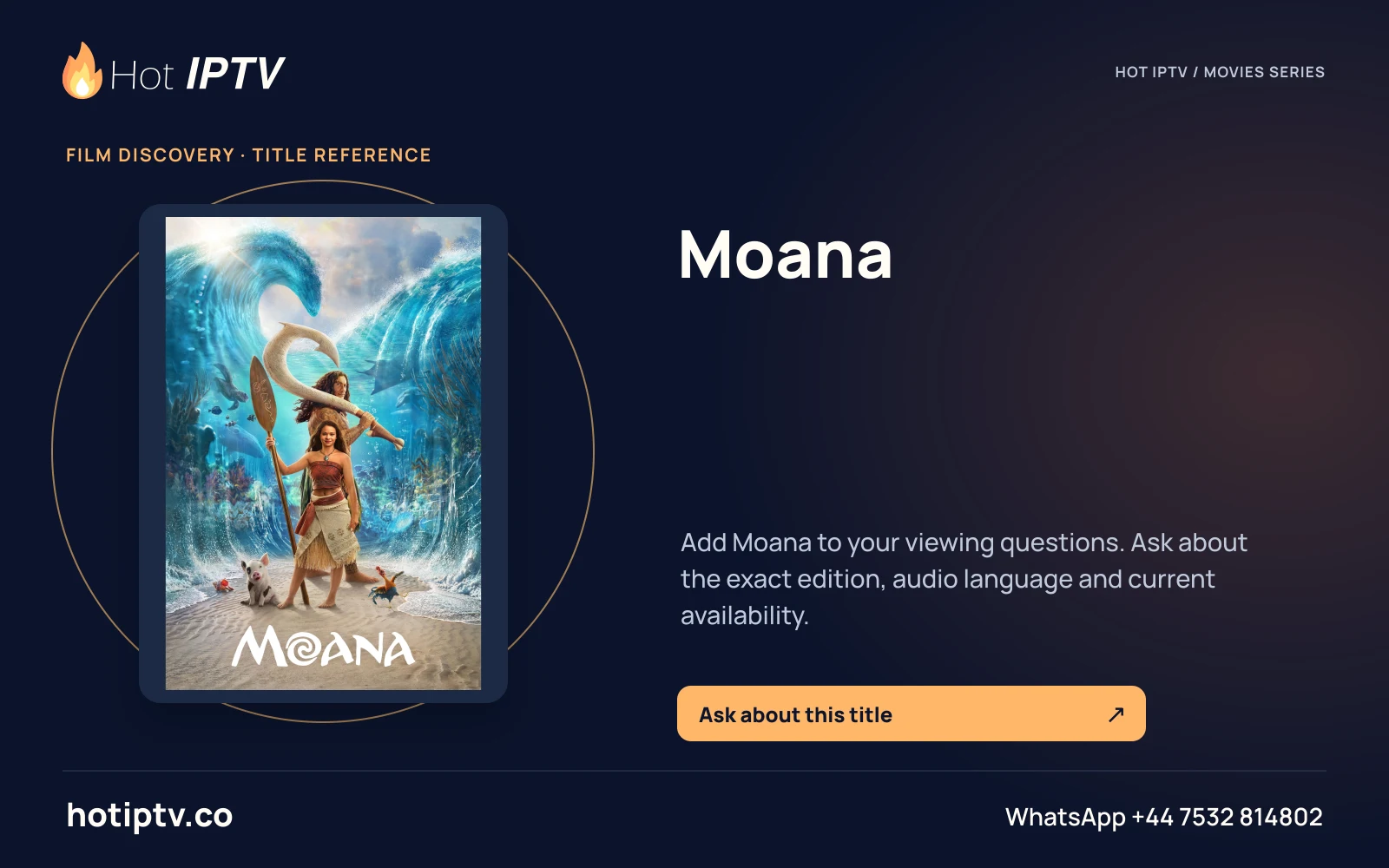
Identify the screen work before asking whether it is available. For a film, retain the full title, year and production form; for a series, add the season and episode. Then specify the edition and language you need. A poster, franchise name or familiar character can identify a related subject while still leading to the wrong production or episode.
Separate the work from the file or offer
A work is the particular film or series production. An edition can differ by cut, language or other explicitly identified version. A viewing offer tells you how an account may obtain that edition. These records are connected, but answering one does not settle the others.
For example, a title appearing in a service’s search can be included with a membership, offered as a rental or purchase, or associated with an additional subscription. Prime Video explicitly documents those different routes. First confirm the work; then read the actual offer shown for the account. This prevents an offer-state problem from being misdiagnosed as a wrong-title problem.
Use real identity clues when a title is shared
Disney’s 2026 Moana page identifies a live-action reimagining with Catherine Lagaʻaia. Disney’s Moana 2 page identifies the 2024 animated sequel. The shared central characters and similar title wording do not make those two items the same film. A year plus production form is more useful than repeatedly asking for “Moana.”
The table shows a compact way to keep those identities clear. It is an example of metadata, not a recommendation or an availability list.
| Requested object | Useful identity fields | Avoid substituting |
|---|---|---|
| Moana (2026) | Live action; Catherine Lagaʻaia | Moana 2 animated sequel |
| Moana 2 (2024) | Animated sequel | 2026 live-action reimagining |
| ONE PIECE live action | Live-action series; season and episode | A manga chapter or animated episode |
Keep progress separate between adaptations
Netflix identifies its ONE PIECE as a live-action adaptation of Eiichiro Oda’s manga. That relationship does not establish that one live-action episode equals one manga chapter or one animated episode. Numbering belongs to the specific production.
If someone follows several forms, keep separate progress notes. “Live-action season two, episode three” is a useful continuation point. “I finished chapter three” answers a different question. Use this distinction when asking for a recap, an episode or a spoiler-free explanation, so a helper does not accidentally select material from further ahead in another adaptation.
Check the season-specific artwork and episode record
A series poster may promote a particular season, a limited series or a broad franchise. Inspect any season number visible in the artwork and compare it with the title listing. If the season is not established, describe the image as a general identity reference rather than assigning a season from memory.
Then check the actual episode name or number. A trailer, behind-the-scenes programme, reunion special and full episode are different items. If a listing’s duration or description seems inconsistent with what you intended, inspect its form before investigating playback. This is a more useful first step than assuming that every result beside the same cast image is interchangeable.
Treat language as an edition requirement
Write whether you need original-language audio, a dubbed track, subtitles, captions or audio description. Those are distinct requirements. A platform’s interface language does not establish the tracks offered on an individual film or episode. Netflix’s help explicitly notes title, device, profile and location factors, and differences between streaming and downloaded language options.
Check the exact episode or film edition in the current local player or title information. Do not borrow a language claim from another season, a trailer or an old review. If several household members depend on one language or accessibility feature, record that as essential before choosing a viewing offer.
Understand what the curated posters establish
The supplied artwork collection contains 65 film selections and 35 series selections. It is an owner-curated reference set, not an independently measured top-100 chart. Its selection does not establish popularity, current rights, a release date in every country or Hot IPTV catalogue inclusion.
A poster is still useful: it can provide a title spelling, visual identity or edition clue. Use those clues to find the studio, publisher or platform’s authoritative title record. If an image and current official naming differ, preserve the historical image label honestly and explain the current name rather than silently inventing a new production.
Send one complete availability question
A practical message names the work, production year or form, season/episode, required language or accessibility feature, viewing country and intended device. If a particular cut is essential, state its verified edition name. Add whether you want a live transmission, on-demand selection or an offline feature.
For example: “I mean the 2026 live-action Moana feature, with the specified audio and subtitles, on this device in this country.” That describes a checkable request without assuming any service carries it. If the item is essential to an order, obtain the current account-specific answer and confirm the agreed edition through the available trial route. Keep the official identity source and that provider reply as separate records.
Sources and review
- Moana — Disney Movies
- Moana 2 — Disney Movies
- ONE PIECE — Netflix Media Center
- What Can I Watch on Prime Video? — Prime Video Help
- Why subtitles or audio isn’t available in a specific language — Netflix Help Center